
Here is a number worth taping inside the truck door: the average home service company takes 47 hours to answer a new lead, and 78% of homeowners hire whichever business replies first. A slow industry, an impatient customer, one gap between them. Local search is where that gap gets settled.
What makes 2026 unusual is that the room where it gets settled changed shape. Google folded AI-written local answers into the same real estate, retired a profile feature contractors had spent years learning to game, and rewrote the rules on reviews. A local SEO strategy is no longer a nice-to-have for a home service business. It is closer to the wiring: you notice it only when it is gone.
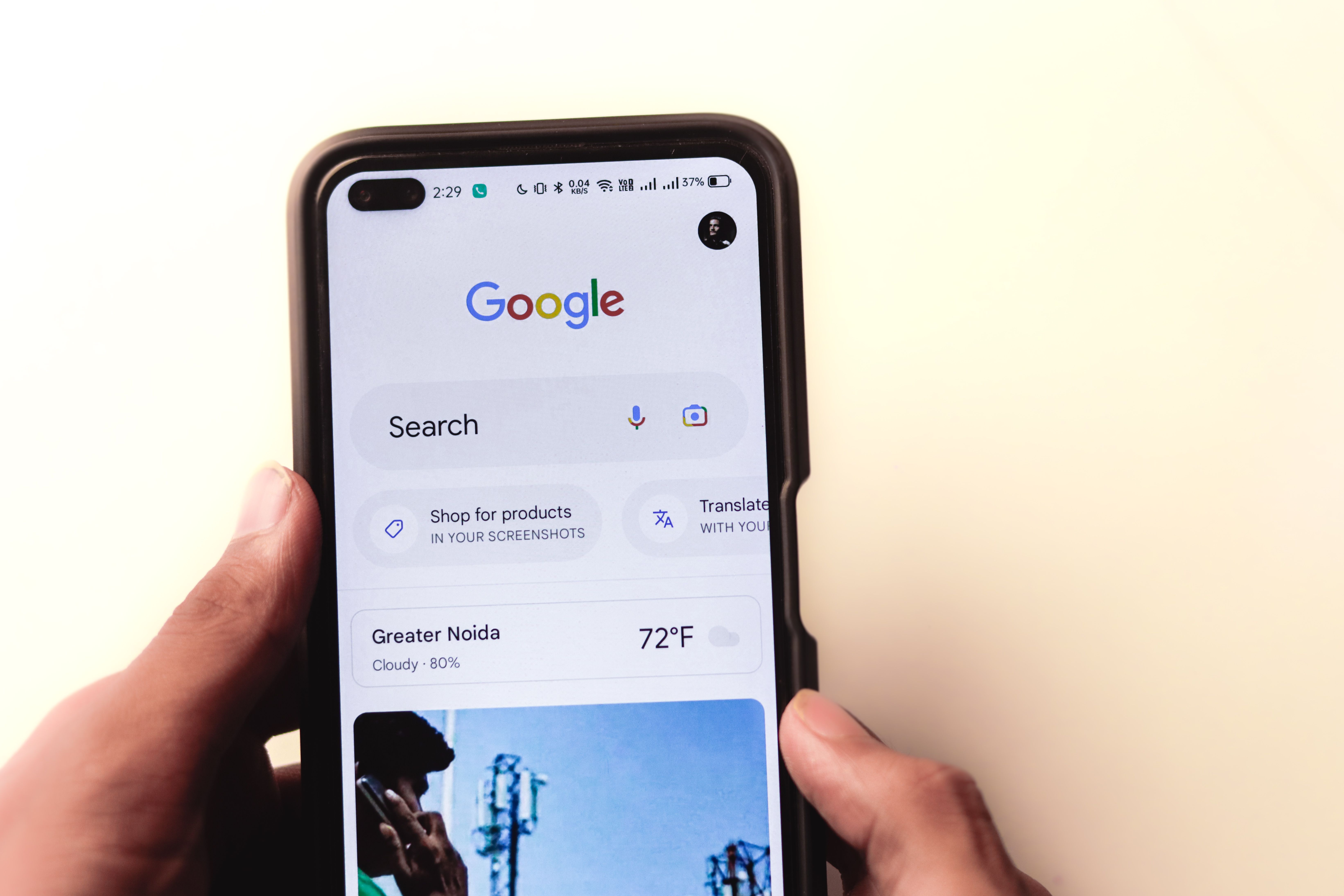
The local results page split into two different games
The first thing to understand is that “local SEO” now describes two competitions running on one page, and they reward different behavior.
Synup’s September 2026 study of 53,900 local search result pages – 49 business categories across 250 US cities – found that AI Overviews appeared on just 4% of “near me” pages but 75% of pages where the query carried a specific need. Same categories, same cities, same week. Only the phrasing moved. Whitespark’s query testing found the mirror image: the classic three-business map pack shows up on roughly 93% of local-intent searches but only 6% of informational ones, while AI Overviews barely touch “near me” intent (15%) and dominate informational (92%) and hybrid (97%) queries.
Translation: when a pipe is gushing, Google still serves the map pack. When a homeowner spends two evenings comparing options – “is a tankless water heater worth it in a 1960s house” – Google now answers in prose, often naming one or two businesses instead of three.
| Map Pack (three businesses) | AI-generated local answer | |
|---|---|---|
| Where it appears | ~93% of local-intent searches | ~15% of local-intent, 97% of hybrid queries |
| What it rewards | Proximity, Google Business Profile, reviews | The same signals plus website content and third-party mentions |
| How many can win | Three per search | Frequently one or two named |
| Typical outcome | A call or a directions request | Often zero-click |
Sources: Whitespark query testing via adgrow360 (September 2026); Synup local SERP study (September 2026). Figures valid as of those dates.
The AI layer is also narrower than the map pack it is replacing, and that is the part with teeth. Researcher Joy Hawkins tracked one set of queries and counted 18,330 distinct businesses appearing across the traditional three-packs – against only 5,943 distinct businesses surfacing in the AI-style local packs for those same searches. Roughly two-thirds of competitors disappear from that format entirely. If your plan assumes the top three slots will always be a ladder with rungs, the ladder just lost some.
What actually changed in 2026, and why most contractor advice hasn’t caught up
Google rebuilt its local stack in the open this year, and a lot of the marketing advice still circulating was written before any of it.
- The Q&A section is dead. Google cut off the Q&A API on 3 November 2025 and began removing the public Q&A block from Business Profiles and Maps on 15 December 2025. The job did not vanish; it moved. Answers are now generated from your profile fields and reviews, so you no longer write the answer – you make the underlying record correct enough for an AI to answer from.
- Ask Maps replaced it. Google launched the Gemini-powered conversational layer on 12 March 2026 in the US and India, then expanded it to more than 150 countries and territories on 6 August 2026. Searchers ask full sentences, and the system generates an answer per query.
- Reviews got a hard rulebook. Google’s April 2026 policy overhaul banned staff review quotas, asking customers to name a specific technician, on-premises review kiosks, and anything offered in exchange. Enforcement is automated. Google’s own trust and safety reporting put policy-violating reviews blocked or removed in 2025 at 292 million – this is not a theoretical risk.
- Freshness became a ranking input, not housekeeping. Multiple 2026 practitioner reports describe measurable visibility drops on profiles that go roughly 30 days without new photos or updates. Google publishes no such “30-day rule,” so treat it as observed consensus rather than policy – but the direction is consistent, and it lines up with the 2026 shift toward engagement signals. In September 2026 alone, Google rolled out view counts for individual Posts and a “Collected Info” panel showing owners what its automated systems have gathered about them.
The thread running through all of it: your Business Profile is no longer a listing you decorate. It is the canonical record Google and its AI layers read when deciding what you are, whether you are open, and whether to recommend you. Incomplete data has nothing accurate to draw from.

The math that should end the “SEO takes too long” argument
Give the paid-first crowd its due, because the case is real. Local Services Ads deliver immediate, exclusive leads, and adoption among contractors climbed from roughly 28% in 2021 to about 70% by late 2025. SearchLight Digital’s February 2026 benchmark across 888 contractors and $6.72M in tracked spend put LSA at a 43.9% call-book rate and a 7.84x closed return. If most of your market is already there, you are not going to outspend your way to peace.
Now the part that argument tends to leave out. First Page Sage’s 2026 industry report found HVAC companies paying $115 per lead through paid ads versus $69 through organic channels, and construction trades paying $280 per lead paid versus $174 organic. Contractor Bear’s January 2026 channel comparison, covering a dozen trades and six channels, ranked Google Business Profile lowest on cost per lead – roughly $12 – with a 22% to 32% close rate, ahead of both organic SEO and every paid option it tracked.
My read: LSA and local SEO are not rivals, and framing them as a choice is the mistake. LSA is a faucet you rent and pay for monthly. Your profile, your local pages, and your review base are an asset that keeps producing after the spend stops. The honest caveat is the ramp – organic visibility typically takes 6 to 12 months before it produces consistent leads. That is a long time. It is also exactly why the contractors who started in 2025 are the ones eating the map pack in 2026.
Reviews are table stakes, not a strategy
BrightLocal’s 2026 Local Consumer Review Survey found 97% of consumers read online reviews, with 41% reading them every time they search for a business – up from 29% in 2025. Nearly half (47%) said they will not use a business with fewer than 20 reviews. Synup’s data adds the sharper edge: for “best [category] in [city]” queries, the businesses that surface are heavily filtered toward a 4.8 rating and above, and 52.6% of map-pack entries already clear that bar.
So reviews are a floor, not a differentiator. The contractors still treating them as a growth lever are playing last decade’s game. Worse, the strategies that used to farm them – the lobby tablet, the “mention Dave by name” ask, the discount in exchange – became explicit violations in April 2026 with automated enforcement attached. I would not touch any of them.
One more number from that Synup study is worth sitting with: 30% of businesses appearing in the map pack have no website link on their profile at all. That is a click Google has nowhere to send. It is also free traffic sitting on the table.

The uncomfortable part: you cannot out-optimize proximity
Here is what people selling local SEO rarely say out loud. Proximity to the searcher accounts for roughly 55% of map-pack weight in Whitespark’s Local Search Ranking Factors. For home services specifically, one 2026 benchmark put proximity at 42%, relevance at 31%, and prominence at 27%. You cannot move your shop, and no amount of keyword work changes the fact that Google is answering “who is near me.”
The mistake is reading that 55% as a reason to do nothing. The controllable layer is real – around 32% of map-pack weight sits in profile signals, with your primary category, the keywords in your business title, and being open at the time of search among the highest-impact factors. And proximity has a workaround most one-truck operators ignore: you do not have to rank everywhere, only in the towns you actually serve. Dedicated service pages for each of those towns, backed by reviews that mention them, let you appear “near” a searcher you are not physically next to. Search Engine Land’s 2026 teardown of the ranking systems layered underneath Google Maps makes the point well: Google is not measuring distance so much as confidence that a business matches the request, and confidence can be built.
Five pieces of standard advice that are quietly wrong in 2026
1. “46% of Google searches have local intent.” You will see this figure in a hundred blog posts. It traces back to a single 2018 remark by a Google representative and has never been formally updated. More defensible 2025 research found about one in four consumers say 41% to 60% of their searches are local-specific. The direction is right. The precision is fiction. Citing it makes you look like you copied the last article, not like you understand your market.
2. “Put ‘near me’ on the page.” Matching the literal phrase mattered when people typed it. It matters much less now that Google infers local intent from location and context, and fills the gap with conversational tools. What replaced it: complete attributes – parking, accessibility, service hours, payment methods – because those are the details an AI needs to answer a specific question about you.
3. “Get a burst of 50 reviews.” Steady beats spiky. A volume spike followed by silence reads to the algorithm, and to customers, as a campaign rather than a business. It is also closer to the patterns Google’s review spam systems flag.
4. “Stuff your business name with keywords.” “Best Plumber Dallas Emergency 24/7” is a suspension waiting to happen. Google’s March 2026 core update specifically targeted local search quality and keyword-stuffed names, and suspension reports were already climbing before that.
5. “You don’t need to worry about aggregators.” Synup found “best [category] in [city]” queries hand about 24% of the page to Reddit and other forums, and Google has been steadily giving aggregator and supplier units more local surface. In September 2026 it extended local business query support to those units in a limited set of regions. The competition for a “best plumber” query is no longer only other plumbers.
A 90-day plan that fits a one-truck operation
None of the above requires an agency retainer or a website rebuild. It requires a couple of focused hours a week, applied in the right order.
| Window | Focus | Concrete tasks |
|---|---|---|
| Weeks 1–2 | Profile foundation | Pick the most specific primary category; fill services, service areas, hours, and attributes; rewrite the description as a plain-language explanation of what you do |
| Weeks 3–4 | Consistency | Audit name, address, and phone across your site, Maps, and the top directories so every record matches exactly |
| Month 2 | Reviews and content | Build a simple ask-at-completion habit; reply to every review within a day; add real job photos weekly; publish two or three service or city pages |
| Month 3 | Measure and extend | Track calls, direction requests, and website clicks in the profile dashboard; add pages for the next towns on your service map; fix whatever the numbers expose |
The profile work is unglamorous, repetitive, and easy to postpone, which is why so many owners hand it off. If you go that route, choose a google my business profile seo company that will show you ranking movement inside your own city, not a generic package with screenshots from another state.

What good looks like at twelve months
You stop thinking about rankings and start noticing the phone. Your profile is fully populated and reviewed monthly. You have enough recent, specific reviews that the star rating is no longer the story. You rank in the towns you actually drive to, not just the one you park in. And when someone asks Google a messy, specific question about your trade, the answer that comes back is built from your data instead of a competitor’s.
That last point is the one to carry forward. The US home services market is a fragmented $842B business in 2026, projected to reach $989B by 2031, and 78% of HVAC contractors employ fewer than 10 people. There is no dominant brand to outrun. There is only whether you show up, accurately, when a homeowner is standing in a flooded kitchen with a phone in their hand.
Frequently asked questions
How long does local SEO take to work for a home service business?
Expect 6 to 12 months before organic visibility produces consistent leads, with the earliest movement usually showing up in map-pack rankings within the first 60 to 90 days. Profile and review improvements move faster than website and authority work.
Do I still need a website if I have a Google Business Profile?
Yes. Around 30% of map-pack entries have no website link, which means Google has no destination to send a click that wants more than a phone number. Your website also gives the AI layers content to read when generating an answer about you, and it confirms the same facts your profile claims.
Is Google Business Profile Q&A still available?
No. Google discontinued the Q&A API on 3 November 2025 and began removing the public Q&A section on 15 December 2025. The role has largely shifted to AI-generated answers drawn from your profile and reviews, so keep the underlying record accurate and complete.
How many Google reviews do I need?
There is no official threshold, but 47% of consumers say they will not use a business with fewer than 20 reviews, and “best” queries tend to filter toward a 4.8 rating and above. Recency and specificity matter as much as total count.
What is the single highest-ROI local SEO task for a contractor?
Filling in and maintaining the Google Business Profile properly. It carries roughly 32% of controllable map-pack weight, produces leads at the lowest cost of any channel tracked in 2026 benchmarks, and feeds the AI answers now appearing on research-heavy queries.
Will AI search kill local SEO?
Not the plumbing half of it. AI Overviews appeared on only 4% of “near me” pages in Synup’s September 2026 study, while the map pack stayed on more than 90% of them. AI is taking over the research phase, which means the profile data it reads has to be right – a reason to invest, not to wait.
How this article was put together. I based the local search figures on Synup’s September 2026 SERP study, Whitespark query testing reported the same month, and Whitespark/BrightLocal’s 2025 Local Search Ranking Factors, and read Google’s own Q&A retirement and review policy changes directly rather than relying on summaries. Cost-per-lead and market-size figures come from 2026 channel benchmarks and industry reports, each named in the text. Where a widely cited statistic could not be traced to a current source – the 46% local-intent figure – I said so. Review and algorithm rules change quickly; recheck the Google policy pages before building any review-generation process.